Nobl9 application (1.182.0)
Release details
new Alert policy analyzer
Alert policy analyzer is now available as a Nobl9 Labs feature. It simulates how an alert policy would have behaved against an SLO's historical data before the policy goes live.
Use it to tune alert conditions, validate alert sensitivity, reduce noisy alerts, and compare policy behavior against real budget changes from a selected historical interval.
This feature is experimental and subject to change. We welcome any feedback as we refine its functionality.
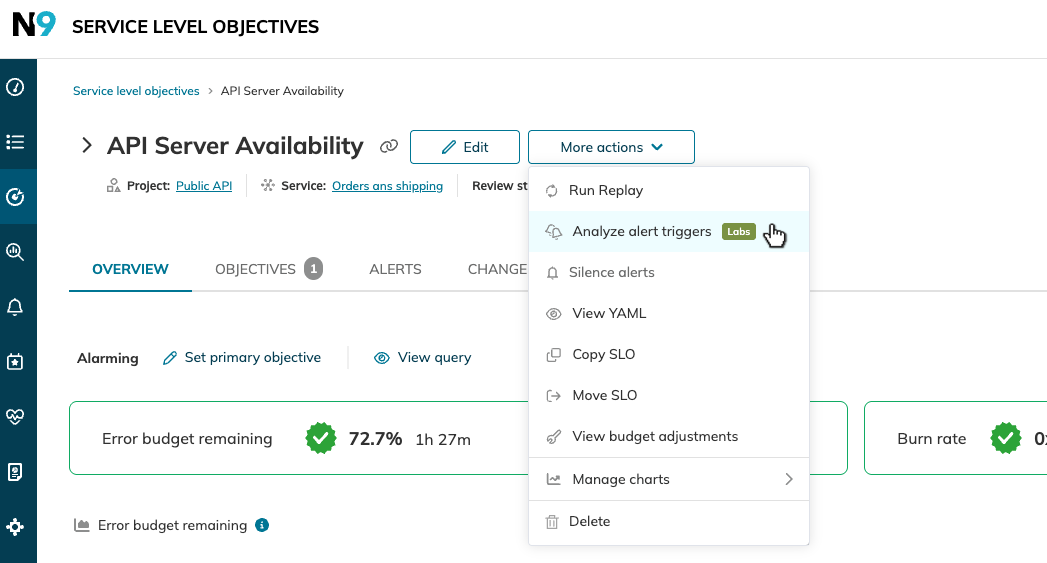
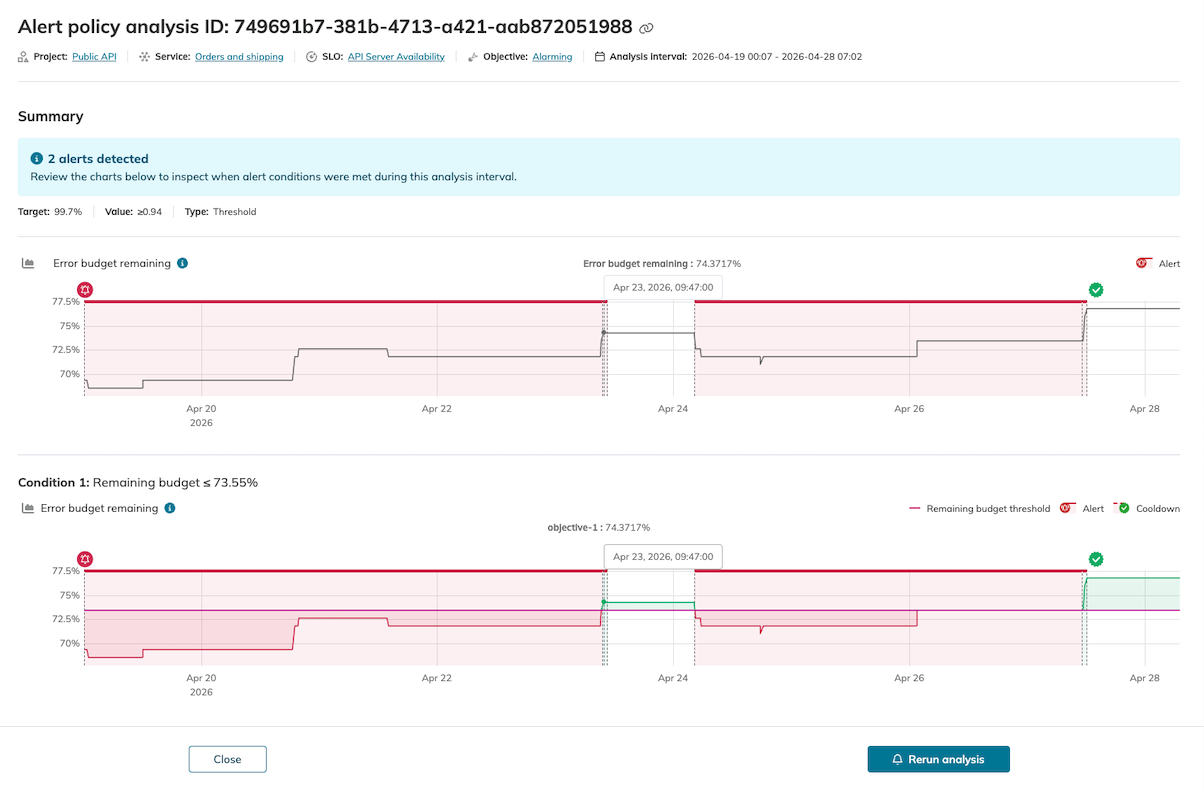
Start an analysis from SLO details, choose the objective and historical interval, then define the alert policy conditions to test. You can use Auto-fill from time range to generate an initial condition from the budget drop observed over the selected interval and adjust it before running the simulation. After the simulation completes, review the detected alerts, error budget remaining chart, and per-condition charts to decide whether the policy is ready or needs adjustment.
new Splunk Observability Replay and SLI Analyzer support
Splunk Observability now supports Replay and SLI Analyzer through a new bounded HTTP-based SignalFlow collection path.
This support applies to newly created Splunk Observability sources. Existing WebSocket-based sources keep their current behavior. The same collection path now powers live data collection for new sources and historical retrieval, aligning live and historical data behavior.
improved SLO History report performance
SLO History reports now load large views more efficiently. The update reduces duplicate API calls and improves responsiveness for reports with many SLOs.
improved Replay performance
Replay now handles time-series writes more efficiently during the overwriting phase, improving throughput under high load.